Let’s explore the types of moulding for both aesthetic and functional reasons, highlighting their durability and the Types of molding materials used to help clarify your choices before making any decisions.
Molding is crucial in interior design; it defines and frames spaces while adding visually interesting details that enhance luxury and create a unique appearance. The various Types of decorative moulding can be customized to fit different rooms and play an essential role in covering gaps between walls, ceilings, and floors.
17 Common Types of Moulding
The Main Types of molding for walls
1- Baseboard Moulding
The Baseboard Moulding is a decorative trim used to cover the gap between the wall and the floor, as well as to protect the wall from damage caused by cleaning materials and foot traffic; it is made of wood, MDF, PVC, or vinyl.
You can apply modern design or traditional designs and determine their heights (the taller it is, the more it hits the dramatic effect in the room).
The standard baseboard height typically ranges from 3 to 5 inches, and it can be bought as single pieces or constructed from multiple layers, which minimizes finishing work on flooring and drywall.
- The Baseboard Moulding is best for protecting walls & completing the flooring look.
- Durability: Very High
- Location: Floor
- Common Materials: PVC, WPC, MDF
2- Crown Moulding
The crown moulding is a decorative trim that creates a sense of heigh, it connects the ceiling with the wall, by aplicating a trim that enhance the interior room finishes or hides imperfections and integrates design elements, it can be crafted of wood or plaster, PVC.
Among the Types of wood moulding, crown molding stands out as a classic choice for adding elegance to any room.
- It is best for creating a clean transition & height illusion.
- Durability: High
- Location: Ceiling
- Common Materials: wood or plaster, PVC, WPC, MDF.
3- Chair Rail Moulding
Chair Rail Moulding is a horizontal trim decoration installed at a height of 30-36 inches. Besides being a decorative option, it also protects the walls from chair damage, as well as protects the wall from scuffs and marks. It can be used in dining rooms and living rooms.
It gives a focal point and enhance the wall dimension, as well it adds texture for paints and wallpaper applied, the sizes varies to fit which style you choose; modern,
Bohemian, traditional, rustic, among other styles.
- It is best for: Adds linear detail & protects from scuffs.
- Durability: High
- Location: Wall
- Common Materials: PVC, MDF.
4- Casing Moulding (Door or Window Surrounds)
Casing Moulding is a decorative trim used to frame the doors and windows, to cover the gap between wall and fame, to concealing the imperfections, installed with wood, MDF, polyurethane, and plastic. It fits the folllowong styles; Colonial, Craftsman, and Victorian.
- It is best for: Frames openings neatly.
- Durability: High
- Location: Wall
- Common Materials: WPC, MDF, PVC.
5- Wainscot Moulding
Wainscot molding is a wood panel decoration applied to the lower walls about 3 to 4 feet high. It has two purposes for us using this decoration option: protection and insulation against cold, damp walls or for decorative appearances that enhance the room style, especially in the dining room.
- It is best for: Adds texture & depth to plain walls.
- Durability: High
- Location: Wall
- Common Materials: PVC, WPC, MDF
6- Cornice Moulding
Cornice molding is a horizontal decorative architectural design applied to buildings, interior walls, or furniture; it is used for diverting rainwater from exterior walls. Available in two designs: simple or elaborate. The common materials used are plaster, wood, MDF, and polyurethane.
- It is best: Smooth modern ceiling finish.
- Durability: High.
- Location: Ceiling.
- Common Materials: PVC, MDF.
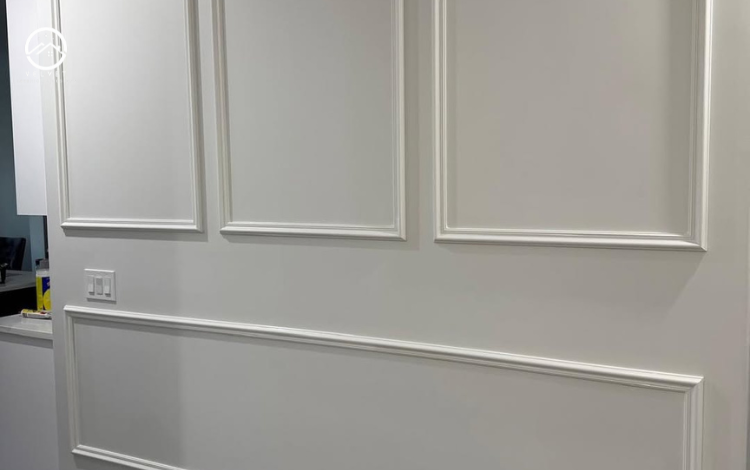
7- Panel Moulding
Panel molding is a decorative trim that creates frames on walls and doors. The purpose of it is to add a stylish texture and depth to a flat surface; it is not just a square pattern; it could also form a rectangular pattern.
As well, you can also paint it as the wall color or another color to create a contrasting look. This decoration style fits both traditional and modern aesthetics and is made of PVC or MDF.
- It is best for: Adds structure to feature walls
- Durability: High.
- Location: Wall.
- Common Materials: PVC, MDF.
8- Picture Frame Moulding
Picture Frame Moulding is a decorative trim that creates a border for a picture or a mirror and other structural and decorative purposes, made from wood, aluminum, and plastic, and can be applied in different shapes and patterns, such as rectangular or square shapes, and can add the final touches through paint and gilding.
- It is best for: Adds simple wall décor detailing
- Durability: Medium.
- Location: Wall.
- Common Materials: MDF, PVC
9- Cap Moulding
Cap molding is a popular decorative trim usage that offers elegant finishes; its purpose it is to cover the joints between moldings to hide the imperfections and add aesthetic touches. As well, it is also used for transforming plain surfaces.
The cap moulding features durability and longevity, and has customization options with either painting or staining, and is made from wood, PVC, or MDF.
- It is best for: Gives a clean finished edge.
- Durability: High.
- Location: Wall.
- Common Materials: PVC, MDF.
10- Architrave Moulding
Architrave molding is a decorative trim used in doors and windows to hide the gaps between them and offer an elegant appearance of the room by concealing joints and protecting edges.
If it is placed around doors and windows, it adds aesthetic touches and modern style. As well, it can be placed around openings and fireplaces. It can be used with other moldings like skirting boards.
- It is best for: Defines architectural lines.
- Durability: High.
- Location: Wall.
- Common Materials: PVC, MDF.
The Decorative Profiles
11- Cove Moulding: Types of molding for ceiling
Cove moulding is a decorative trim that creates a smooth transition between the walls and the ceilings, or it could be sied on cabinets, shelves, and mantels. This decorative option fits perfectly with both traditional and contemporary styles.
The Cove moulding is not just a decorative options it also works on hiding joints and imperfections, can be made with different materials such as wood, polystyrene, and vinyl.
- It is best for: Soft transition between wall & ceiling.
- Durability: High.
- Location: Ceiling.
- Common Materials: PVC, MDF.
12- Dentil Moulding
Dentil molding is a decorative trim. it is different from other molding options that we mentioned before; it is small, has tooth-like rectangular blocks, and has a repeating pattern. These decoration options could be used in interior and exterior areas: under cornices, along rooflines or cabinets.
13- Egg-and-Dart Moulding
Egg-and-Dart Moulding is a decorative Greek and Roman architectural design that has a pattern of alternating egg-shaped ovals that resemble arrows or anchors. Made of wood, stone, or plaster materials,
The design of the egg and arrow template symbolizes the duality of life (which is the egg) and death (which is the arrow). According to some historians, it is wonderful to apply this design in your property to be unique and distinguished by these unique designs.
14- Bead Moulding
Bead molding is a repeated decoration trim that has a small size and has rounded bead-like shapes. This decorative trim enhances the visual interest by catching the eyes with detailed patterns on the walls, ceilings, cabinets, and furniture. The material they are made of is wood, plastic, or plaster.
The Floor & Edge Finishes
15- Shoe Moulding
Shoe molding is a decorative trim used at the bottom of baseboards to conceal gaps and add an elegant, professional appearance. It also helps prevent dirt and pests from accumulating. While quarter-round molding is a more affordable option that offers similar benefits, shoe molding is generally a less expensive choice compared to crown molding.
- It is best for: Covers gaps & completes flooring.
- Durability: Very High.
- Location: Floor.
- Common Materials: PVC, WPC.
16- Quarter Round Moulding
Quarter Round Mouldings a decorative trim with a quarter-circle cross-section, as we mentioned, it is a cheaper option compared to shoe moulding; it is used to cover the transition between surfaces, mainly between the floor and wall. To hide imperfections and offer a soft transition.
- It is best for: Hides expansion gaps.
- Durability: Very High.
- Location: Floor.
- Common Materials: PVC, WPC.
17- Cove Base Moulding
Cove Base Moulding is a decorative trim installed between the floor and wall to create a smooth, curved, and elegant transition. It is made of vinyl or rubber materials and has 90-degree angles that trap dirt and bacteria. This material features a Hygienic material, protection, and durability.
- It is best for: Used in modern commercial interiors.
- Durability: High.
- Location: Floor.
- Common Materials: PVC, WPC.
FAQS
What are the 5 types of moulding?
- Crown molding is used to create a smooth transition between wall and ceiling and is often used in living rooms, dining room and finally bedrooms. There are many forms of your crown molding available that are simple and complex to your own taste.
- Baseboards: The purpose of them is to create a gap in the wall to protect the wall from damage or roughness. Their appearance also gives them visibility, and they have many uses in interior design. They are 2 to 6 inches high.
- Chair Rails are installed horizontally to protect the walls from chairs. They are usually used in dining rooms and are 30 to 40 inches high from the floor. They may also be used in the hallways of the house.
- Casing (window and door decoration) is a frame that surrounds the window and doors and provides a wonderful appearance that matches the style of the house, whatever it may be, and there are many simple, complex and modern options.
- Wainscoting: These are decorative wooden boards used for the lower or lower third of the wall to add a special texture and protect against heavy traffic inside the house. They are available in many types and shapes.
What is moulding and its types?
Molding is a manufacturing process in which a flexible material is formed using a rigid frame called a mold. Various materials, including wood or plaster, are used to cover transitions between the ceiling and the wall or the floor and the wall or to surround doors and windows, among many other uses. They are also used for decoration and adding aesthetic touches.
What is the most popular moulding?
The most popular and used moulding in Canada is baseboard moulding, due to its high functionality, numerous available styles, and affordable prices.