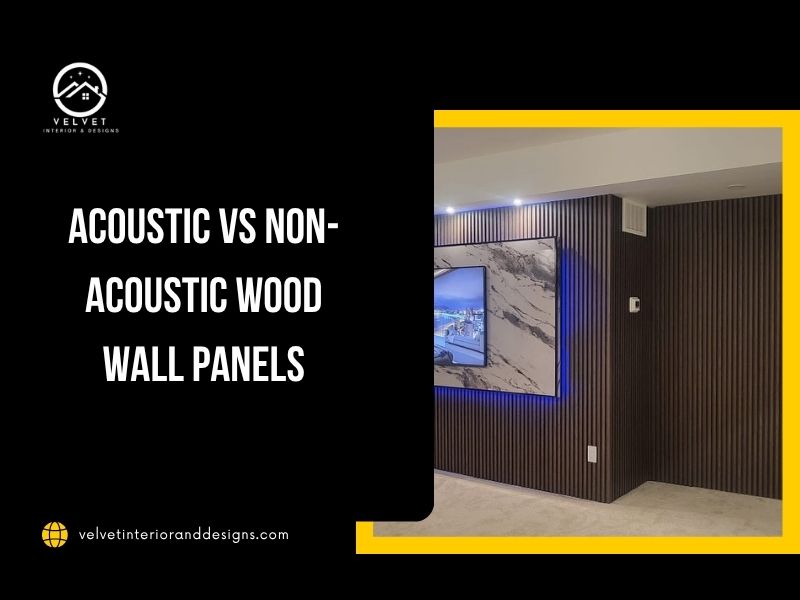
Acoustic vs non-acoustic wood wall panels is an important comparison for Canadian homeowners looking to understand the difference between the two and how to balance interior design with sound performance for the best results. The acoustic wood wall panels Canada homeowners prefer are designed to improve sound quality while adding a modern and stylish touch to interiors.
Decorative wood wall panels are also a popular choice for enhancing wall aesthetics with natural textures, warmth, and contemporary design. This leads us to provide detailed information about acoustic and non-acoustic wood wall panels to help you make a clear and informed decision.
Transform your interiors with Velvet Interior and Design wall panels, offering stylish, modern, and high-quality solutions for every space.
Acoustic vs Non-Acoustic Wood Wall Panels
There are differences between acoustic and non-acoustic wood wall panels, as the acoustic ones are designed to absorb sounds and reduce echo because they include a backing layer like felt or foam, and the non-acoustic ones are designed for decorations and aesthetic methods focusing on surface design like wood grain or texture.
The Acoustic wood wall panels work to improve room acoustics and speech clarity; on the other hand, the non-acoustic panels have minimal impact on sound control, mainly used in living rooms and bedrooms, but acoustic panels are popular to use in studios, offices, and media rooms.
You will find that acoustic wood wall panels in Canada are usually thicker or layered structures, which cost more, but the non-acoustic panels are often lighter and simpler in build, which is considered a budget-friendly option.
Note, Both acoustic and non-acoustic wood wall panels can be combined for a decorative yet functional interior design.
Difference Between Acoustic and Decorative Wall Panels
The difference between acoustic wall panels and decorative wall panels is that one absorbs sound and provides visual enhancement, while the other focuses solely on visual enhancement. Both are important if they match your needs.
The acoustic panels reduce echo and reverberation using felt or acoustic foam, but decorative panels do not significantly affect sound behavior in a room; they only provide visual enhancement, with finishes such as MDF, PVC, veneer, or solid wood.
| Feature | Acoustic Wall Panels | Decorative Wall Panels |
| Purpose | Sound absorption | Visual enhancement |
| Material | Felt, foam, MDF, acoustic backing | MDF, PVC, wood veneer, WPC |
| Sound Control | Reduces echo and noise | Minimal sound reduction |
| Design | Functional + modern | Mainly decorative |
| Colors | Neutral and modern tones | Wide range of colors and finishes |
| Texture | Slatted or perforated surfaces | Smooth, textured, or patterned |
| Installation | Clips, screws, adhesive | Adhesive or screws |
| Thickness | Usually thicker | Usually thinner |
| Best Use | Offices, studios, media rooms | Living rooms, bedrooms |
| Cost | Higher due to acoustic features | More budget-friendly |
| Maintenance | Easy to clean | Easy to maintain |
| Style | Modern and functional | Decorative and aesthetic |
Are Wood Wall Panels Soundproof?
No, wood wall panels are not fully soundproof on their own; they provide limited sound reduction because total soundproofing requires dense materials and insulation layers, and it is not available in the wood wall panels. The standard panels reduce light echo, not blocking noise, but the solid wood has moderate sound-dampening properties.
Are Wood Wall Panels Good for Soundproofing?
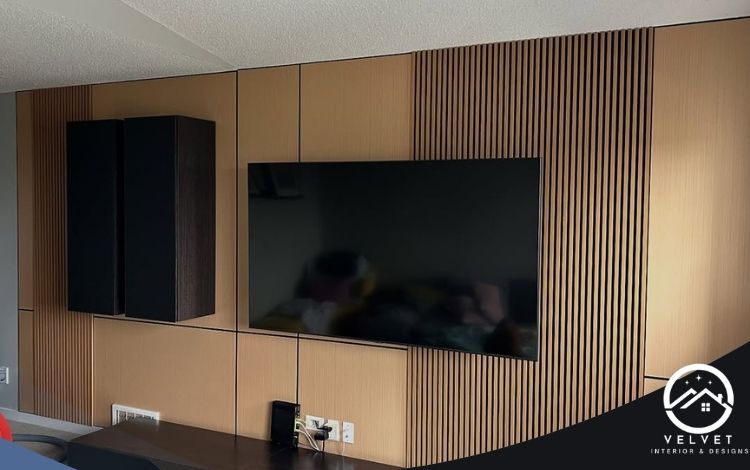
Choosing only wood wall panels for soundproofing the room is not strong enough; it helps to improve acoustic comfort inside a room but does not block the sound totally. Best material that performs sound control is wood slat panels; it reduces echo and sound reflection.
You can use the wood wall panels in rooms with hard surfaces like tile or concrete to enhance speech clarity and audio quality. Also, you can combine other insulation materials for better sound control.
Do Acoustic Wood Panels Reduce Noise in Homes?
Yes, acoustic wood panels help reduce noise in homes; the panels absorb echo and sound reflections and improve speech clarity, so they are better used in living rooms, as well as reduce noise in open-plan homes. You can also use the acoustic wood wall panels in TV rooms and entertainment areas, but for you to know, they don’t completely block external noise sources; they just control noise levels.
Acoustic Wood Panels are most effective on large, flat wall surfaces and improve overall acoustic comfort in rooms; it is commonly used in modern Canadian homes.
When Should You Use Acoustic Wall Panels?
Use acoustic wall panels when your rooms have echoes, in home theaters or media rooms, living rooms or meeting rooms, and others. The acoustic is helpful to be used in bedrooms for noise comfort or in rooms that have hard surfaces like glass. Furthermore, it is better to be installed in gaming and streaming setups to improve sound clarity as well as in music or recording spaces.
Best Wall Panels for Soundproofing in Canada
The best wall panels for soundproofing in Canada are acoustic wood slat panels; they are the most popular option, as are the wood veneer acoustic panels that offer a premium natural look, besides the panels with felt backing that work to improve sound absorption.
There is also the MDF acoustic panel; it is a more common material in Canada because it features effective cost, and also the WPC panels, because they feature moisture resistance and durability. Moreover, you should ask for panels that handle temperature changes because they are a must in Canada’s weather and climate changes.
FAQs about Acoustic vs non-acoustic wood wall panels
Are wood wall panels soundproof?
No, wood wall panels are not fully soundproof; they can provide limited sound reduction and reduce sound transmission. You can use the acoustic panels to control noise.
What is the difference between acoustic and decorative wall panels?
The difference between acoustic and decorative wall panels is that acoustic panels absorb sounds and control noise, and the decorative panels focus on visual appearance and interior design.
Acoustic panels reduce echo, reverberation, and background noise, but the decorative wood wall panels do not significantly affect acoustics. The acoustic panels include felt, foam, or sound-absorbing backing; the decorative panels are usually made from MDF, veneer, or PVC finishes.
Are acoustic wood panels worth it for homes?
Yes, acoustic wood wall panels are worth it for homes because they improve indoor sound comfort, clarity, and quality. Furthermore, it helps to reduce echo in living rooms and open spaces. It is also helpful for houses with hard surfaces or open floor plans.
Use these panels to enhance privacy by reducing sound reflection and to feature a long-term interior investment.
Can decorative wood panels reduce noise?
No, decorative wood panels only provide minimal noise reduction, not block it. It reduces light echo depending on thickness and installation method.
Where should you install acoustic panels?
You should install acoustic panels in high sound reflection spaces, like living rooms and open-plan areas. Also, it is ideal to install in home theaters to improve sound clarity or in the bedrooms for reducing outside noise reflection.