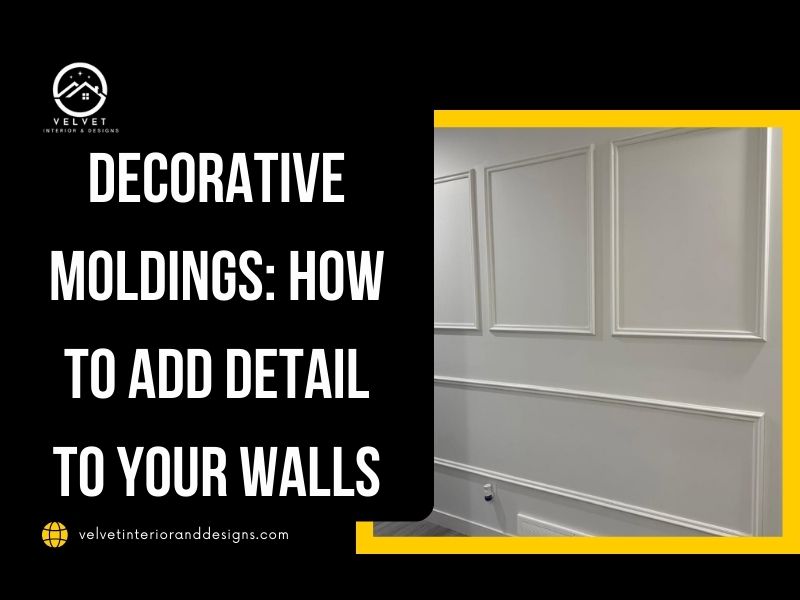
Decorative moldings are architectural elements, such as crown molding, baseboards, and chair rails, that are added to walls to enhance visual appeal and depth, as well as to transform plain walls into elegant and well-designed surfaces. Decorative wall molding is used in both classic and modern interiors, creating structure, balance, and a sense of luxury in any space, besides highlighting ceilings, doors, and wall panels perfectly.
Wall molding peel-and-stick material is DIY-friendly and suitable for different applications like homes, offices, hotels, and commercial interiors. As well, it is available in many styles, sizes, and materials. When applied in your spaces, it will enhance the overall value and style of your interiors. Most importantly, it’s a cost-effective way to upgrade walls without major renovation.
5 Popular Types of Wall Molding Designs
1- Crown molding
Crown molding is a decorative trim used in ceilings, cabinets, and doors for concealing imperfections and creating architectural interest. It creates a smooth and elegant visual transition between surfaces. As well, it adds height to rooms that match the classic and traditional interiors in living rooms or Master bedroom wall molding ideas.
2- Chair rail molding
Chair rail molding is a horizontal strip of trim installed at chair height, around 32-36 inches from the floor. It protects the wall from scuffs, dents, and marks caused by the backs of moving chairs and other furniture. As well, it creates decorative wall panels using thin trim that delivers a classic look to your space.
3- Picture Frame Molding
Picture frame molding is decorative strips applied to walls in rectangular shapes, which adds depth and detail without covering large wall areas. Create an elegant and structured wall appearance in your living room or Wall moulding design for bedroom, and hallways. It perfectly matches with classic and modern interiors.
4- Wainscoting Molding
Wainscoting molding covers the lower portion of the wall, which mainly works to protect walls from impact, moisture, and daily wear while adding texture and architectural structure to interiors. It is commonly used in bathrooms, corridors, and dining rooms, and improves durability while enhancing wall appearance.
This molding style is effective for wall trim ideas for bathroom applications, and it supports both traditional and transitional designs. This decorative molding is often used in classic wall molding design for bedroom layouts.
5- Modern Slim Wall Molding
Modern slim wall molding designed for contemporary and minimalist interiors that avoids heavy detailing for a sleek look. It is widely used in wall molding ideas and modern designs.
Commonly used in bedrooms, offices, and modern living rooms to enhance geometry and symmetry on walls and also it is easy to combine with neutral colors.
Velvet Interior and Design offers premium accessories, LED lighting, decorative mirrors, and wall molding to enhance modern and classic interiors.
Choosing the Right Decorative Wall Moulding
The process of choosing the right decorative wall moulding depends on several reasons, like
- The room size
- Ceiling heights
- The interior and furniture style
- Material choice
- Moisture-resistant areas
First of all, the room size should guide the molding width and thickness. And the ceiling height affects how large or detailed the molding should be. Coming to mention, if you have traditional interiors, it will suit detailed and decorative molding styles, but the modern spaces work best with simple and clean molding profiles.
The Material choice as we mentioned before, has an impact on durability, cost, and maintenance needs, which are important elements to consider in choosing the right decorative wall molding.
Choosing the wall moulding with a moisture-resistant feature is ideal for kitchens and bathrooms. Last thing, considering the style of the interior and the room wall color, it is important to ensure design harmony.
Moulding vs. Trim
What are the differences between molding and Wall molding trim? let’s discover the differences from the following:
The choice of Molding material considered mainly a decorative option, while choosing trim can be decorative or functional, as it is often used to cover gaps around doors, windows, and floors.
All moldings are considered trim, but not all trim is molding, as you will find that trim often has a simpler and cleaner design, while molding has more detailed and shaped profiles, and it focuses on enhancing interior style and elegance, while adding decorative trim to walls focuses on finishing edges and protecting surfaces. But I have to mention that both contribute to a polished interior look.
FAQS
How to attach decorative molding to a wall?
You can attach decorative molding to a wall with construction adhesive and finishing nails. But you have first to clean the surface and make it dry and smooth before installation, then measure and cut the panels.
What is decorative molding on walls called?
Decorative molding on walls is called wall molding or decorative trim or architectural molding, and some of its styles are based on function, such as crown molding or panel molding.
Is wall molding outdated?
No, the wall molding is not outdated, Wall molding ideas modern remain popular as well in contemporary, classic, and luxury homes because they add character to plain and flat walls.
How to make a molding design on a wall?
To make a molding design on a wall, you have to plan the molding style and layout, then measure the wall, and then cut the panels, for accurate finishing, mark the wall in lines.