How to Choose the Right Wall Panel for Your Home? How many times have you heard this repeated question, and how many times have you asked for and sought a clear, complete guide?
In this blog, you will be able to decide between WPC, PVC, MDF, Natural Wood, Acoustic Panels, and other materials and options in front of you. All these numerous materials and their variety of designs and patterns give you the advantage to choose what fits and matches perfectly with your goals.
As well, this variety of choices can lead to distraction, but we are here to assist you.
What Is Panelling In Interior Design?
Panelling In Interior Design is a decorative option to design walls, ceilings, and doors. It has a variety of material choices, such as wood, MDF, PVC, metal, or fabric. With a wide range of designs, patterns, and cost ranges.
These options for interior wall paneling add character, texture, and warmth to spaces. It is not just a luxury and elegant look; it is also insulation, sound dampening, and wall protection options.
How to Choose the Right Wall Panel for Your Home: 2025 Guide
Let’s make it easier by asking the right questions to get a clear answer for “How To Choose The Right Wall Panel For Your Home: Complete Guide” on discussing Types Of Wall Panelling Materials, Traditional Wall Panelling, and the Cheap Interior Wall Paneling 4×8 Sheets.
Are you budget-friendly in choosing the right wall panel?
If yes, you have to look into these materials that feature effective, friendly prices:
- MDF
- PVC
- Plywood
- Peel-and-stick vinyl
1- MDF Wall panel material is strong, durable, and cost-effective. MDF is made from wood fibers mixed with wax and resin binders, then compressed into panels under heat and pressure.
2- PVC Wall panel material is made of polyvinyl chloride (PVC) resin; it is durable, affordable, and resistant to moisture, water, and humidity.
3- Plywood wall panel is made of thin layers of wood veneer, called “plies,” that are cross-laminated and glued together with strong adhesives under heat and pressure; it is resistant to impact, warping, and cracking, and features a high strength-to-weight ratio and dimensional stability.
4- Peel-and-stick vinyl is made of polyvinyl chloride (PVC) resins; it has easy DIY installation, pre-applied adhesive backing, and water resistance.
Need a wall panel with high moisture resistance for kitchens and bathrooms?
WPC (Wood-Plastic Composite) wall panels feature high moisture resistance for kitchens and bathrooms, making them 100% waterproof and highly resistant to moisture, mold, and water damage. Moreover, it requires low maintenance and a simple way to clean it.
Looking for an environmentally friendly wall panel option?
1- Bamboo is a decorative wall panel; it is a sustainable building material for interior or exterior walls, and it is made from compressed bamboo fibers or thin strips of bamboo glued to a backing.
This material is an environmentally friendly option, a rapidly renewable resource, and features durability and moisture resistance as well.
2- Recycled WPC is made from a blend of recycled wood fibers and recycled plastic, with added chemical additives. This material is an environmentally friendly wall panel option.
It features durability, water resistance, and minimal maintenance; it can be used in outdoor and indoor areas.
What are the wall panels that feature a Luxury Look?
1- 3D Stone is one of the choices of the wall panels that feature a Luxury Look due to its addition of depth, texture, and visual interest.
It is made from high-density polyurethane (PU) to mimic the appearance of natural stone and has an effective cost compared to natural stone.
As well, it is cheaper to ship, easier to install, and costs less to get the luxurious look you want.
2- Resin Panels is a luxurious decorative wall panel that offers three-dimensional metallic surfaces. (You can add pigments or LED lighting to add elegant touches).
Resin panels can be expensive; they range from $50 to $300 per square meter. It is resistant to scratches and impacts as well as lightweight, easy to install, and clean.

Types Of Wall Panelling Materials
PVC (Polyvinyl Chloride) Panels
PVC panels are made from polyvinyl chloride (PVC) resin blended with additives like fillers, stabilizers, plasticizers, pigments, and foaming agents to enhance strength, durability, and appearance.
PVC panels feature water resistance, durability, and low maintenance, as well as being lightweight, easy to install, and costing less in shipping and price, with a variety of choices of finishes and colors.
PVC is a Cheap Interior Wall Paneling 4×8 Sheets, and it is the right choice for budget-friendly projects and in kitchen and bathroom applications due to its moisture-proof, mold-resistant, and fire-resistant properties.
WPC (Wood-Plastic Composite) Panels
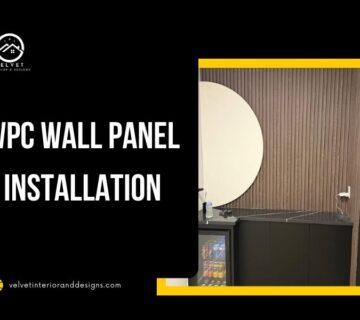
WPC (Wood-Plastic Composite) Panels are decorative panels that add luxurious touches that are made from a mixture of wood fibers or flour, thermoplastics like HDPE or PVC, and additives such as pigments, coupling agents, and UV stabilizers.
WPC panels are resistant to moisture, pests, and weathering. It is also environmentally friendly, made from recycled materials. You will find the WPC (Wood-Plastic Composite) Panels in a wide variety of styles, colors, and finishes. WPC panels can be designed as Shiplap Wall Panelling combines the look and style, but it is generally expensive.
Take Notice: Wooden Wall Panelling Details Dwg is a CAD drawing file that you can use to draw and plan the specifications required to install wall panels in a detailed manner, with dimensions so that you can make decisions about construction and carpentry methods and the proper method of cladding and installation on the wall.
MDF Wall Panels
MDF Wall Panel is Traditional Wall Panelling made from wood fibers mixed with resin (and small amounts of wax and water) that are compressed under high pressure to form strong, uniform boards.
MDF Panels are an affordable wall covering choice, easy to machine (cut and routed), and there are choices of MDF panels that feature waterproof and moisture-resistant qualities.
Note: the standard MDF panels are not waterproof or moisture-resistant; you should ask first if you will apply them in moist areas like bathrooms.
Solid Wood Panels
Solid wood panels are made of natural wood, often from hardwoods like oak, beech, and ash, or softwoods like pine and spruce. This material features stability, durability, longevity, thermal insulation, and environmental friendliness.
Bamboo Panels
Bamboo Panels are made from compressed bamboo strips; they have a variety of patterns: horizontal, vertical, or strand-woven. It features resistance to moisture and temperature changes, Durability, Sustainability, and can be used for a wide range of applications.
3D Wall Panels
3D Wall Panels can be made of Polyvinyl Chloride (PVC), Wood-Plastic Composite (WPC), or Gypsum.
- PVC features are Lightweight, durable, waterproof, and easy to install.
- WPC features include greater durability and moisture resistance. It is often made with recycled materials.
- Gypsum features are sturdy and offer a solid, dimensional appearance.
FAQs about How To Choose The Right Wall Panel
Which Type Of Wall Panel Is Best?
The best wall panel depends on your needs and budget.
- PVC is an affordable, durable, and low-maintenance material.
- MDF is a classic and offers a natural wood look.
- acoustic panels for sound absorption.
How To Calculate Wall Panels Needed?
- First, measure the wall length.
- Second, divide the total length by the width of a single panel.
- Third, round up to the nearest whole number to determine the number of panels needed.
- Fourth, subtract the total desired gap width from the wall length.
- Last step: divide the resulting figure by the desired number of panels for the wall layout
What Are The Factors That Determine The Choice And Design Of A Wall?
- Functional and Structural Needs: The walls require strength, stability, and safety.
- Environmental and Aesthetic Factors: insulation, sustainability, and the desired visual style, color, and finish.
- Budget Consideration: durability, maintenance needs, material availability, and long-term lifecycle costs.