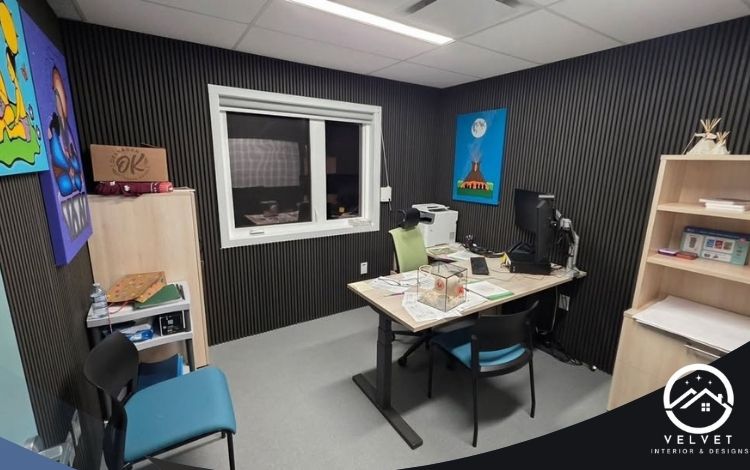
Acoustic panels are a great option to have both a decorative element and a functional material. They are known for sound absorption and reducing echo and reverberation inside a room to improve speech clarity, making them ideal for offices, meeting rooms, and classrooms.
As well, the acoustic panels enhance sound quality in studios, home cinemas, and podcast rooms. They do not completely block sound, but they control the reflections. Although there are mistakes to avoid when installing acoustic panels, let’s discover the common mistakes when installing acoustic panels in this blog.
What are acoustic panels?
The acoustic panels are specialized sound absorbers designed to improve room acoustics by reducing noise, echoes, and reverberation, commonly made from sound-absorbing materials like PET felt, foam, fabric, or mineral wool.
The panels help to reduce noise levels, creating a quieter and more comfortable environment, making it a perfect choice for offices and homes. It is lightweight, which makes for an easy and fast installation process and is ideal for DIY projects.
You will find the acoustic panels available in various sizes, shapes, colors, and textures to match interior designs at Velvet Interior and Design. It can be applied in various spaces, such as residential and commercial spaces, including homes, restaurants, and offices.
Velvet Interior Design offers premium decorative wall panels that combine quality, durability, and modern design.
Mistakes to avoid when installing acoustic panels
It is important to avoid the common mistakes when installing acoustic panels so you can ensure maximum sound absorption performance, which means the panels work and reduce echo and reverberation; otherwise, it will just be an aesthetic form.
One mistake in installing acoustic panels won’t improve the intended speech clarity and audio quality, especially if you are applying the panel for offices, studios, and home theaters. As well, it is considered a waste of money on materials that won’t work effectively if installed incorrectly.
- The random installation without planning the reflection points in the wall.
- Covering the small walls and ignoring the walls leads to unbalanced sound control.
- Placing the acoustic panels high or low instead of at ear level.
- Use a few acoustic panels for large rooms.
- Using weel adhesive can fall over the panel. in a short time.
- Not measuring the wall before the installation process, which causes poor alignment and uneven spacing between the panels.
- The wall before installing wasn’t clean or dry, which reduces adhesive strength and stability.
Knowing the right steps on how to install acoustic panels saves time, effort, and money because it avoids errors and common mistakes when installing acoustic panels.
You will find at Velvet Interior and Design a fine collection of Acoustic Panels with a variety of colors and designs that fit different room styles, at an effective cost, and with strong and durable material.
FAQs about Mistakes to Avoid When Installing Acoustic Panels
What are common panelling mistakes?
The most common paneling mistake is installing it on uneven walls or having incorrect measurements, which leads to gaps and misaligned joints. Another top mistake is ignoring wall preparation, including cleaning and drying, to prevent weakening the adhesive strength.
What are common soundproofing mistakes?
- Confusing soundproofing with sound absorption.
- Treating only one surface and ignoring other sound paths.
- Leaving gaps, cracks, or air leaks in the room.
- Using thin materials that don’t block sound effectively.
How to place acoustic panels correctly?
- Determine the sound leaking and reflection points on the wall.
- Measure the wall and the panels correctly.
- Clean the wall and make it dry before installing.
- Use a strong adhesive.
- Place the panels on opposite walls for balanced sound control.
- Install panels at ear level for best performance.
- Keep the exact spacing within the panels to have a symmetrical layout.
- Avoid placing all panels on a single wall.
- Use the correct panel thickness for the target frequency range.
What are the disadvantages of acoustic wall panels?
- The acoustic wall panels are not completely soundproofing a room.
- The high-quality panels are expensive.
- It requires proper placement to achieve an effective result.
- Some panel reduces the wall space.
- The fabric acoustic panel may collect dust over time.
- Foam acoustic panels can be less durable than solid materials.
- It is not suitable for wet or high-humidity areas.