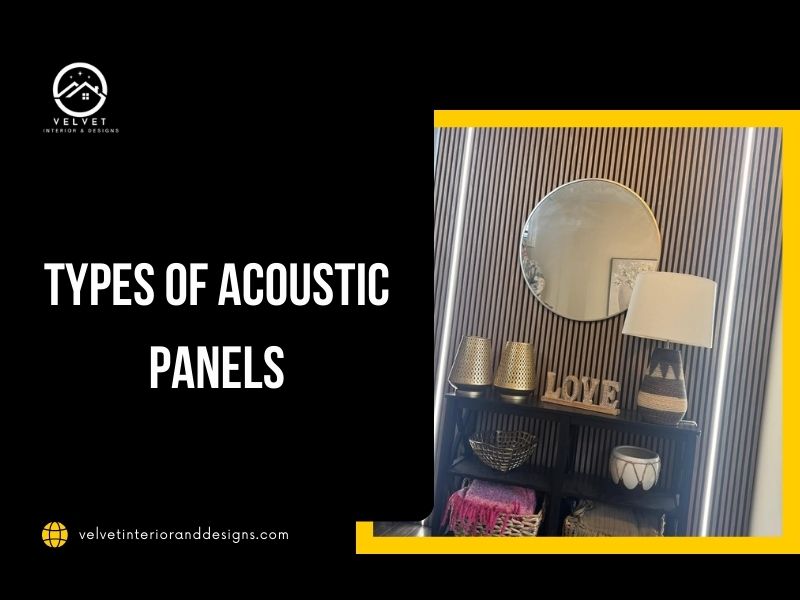
Types of Acoustic Panels are designed to suit different interior spaces such as offices, studios, and residential rooms, they are available in various materials, which is why you should know the types to choose wisely.
The Acoustic panel board is designed to absorb sound waves and reduce noise inside a room while offering the style you aim for in your home, office, music rooms, and others. It doesn’t block sound completely, but it improves the sound quality.
You can install it on walls, ceilings, or corners, customizing it in different shapes, sizes, colors, and textures to match interior design styles.
What is acoustic panels made of?
The acoustic panels are made of different materials with sound-absorbing cores like mineral wool, fiberglass, open-cell foam, or polyester. It is used in walls and ceilings to reduce echo and reverberation by absorbing the sound reflections, which makes the room less noisy and more comfortable.
Commonly, the acoustic panels are used in offices, meeting rooms, classrooms, and conference spaces. As well as in studios, home theaters, and music rooms, they improve audio performance. And to increase productivity in workplaces, you must apply these panels to reduce noise to focus better on your work.
The panels are available in different materials, designs, and colors to fit different room styles, as they are easy to install on walls and ceilings without major construction work.
Acoustic Panels vs Soundproofing
The difference between acoustic panels and soundproofing is that acoustic panels reduce echo and improve sound clarity, while soundproofing blocks sound from entering and leaving the room.
The acoustic panels work by controlling reflections within the space. The soundproofing to be installed requires dense materials like concrete or mass-loaded vinyl. Installing acoustics in walls or ceilings is easier because it is usually lightweight, doesn’t require professionals, and is suitable for DIY projects.
Both solutions can be combined for the best results, but using soundproofing material costs more and often requires construction changes, while acoustic panels cost less and don’t require any construction changes.
Types of Acoustic Panels for Walls
There are different types of acoustic panels wall to know about before making the decision to install one in your home or office. Here are some of the acoustic panel types:
- The most common decorative acoustic panel is the fabric-wrapped material.
- Wooden slat acoustic panels are a modern choice that offers sound control.
- For a lightweight, easy-to-install, and affordable choice, choose acoustic foam.
- The polyester fiber acoustic panels are made from eco-friendly and durable material.
- Perforated Wood Panels provide a natural look with acoustic backing; they reduce echo and reverberation while maintaining some natural sound reflection.
The Velvet Acoustic Panel Collection in Canada offers premium acoustic panelling for walls designed to improve sound quality while adding a modern and stylish interior finish.
Types of Acoustic Panels Interior
1- Fabric Acoustic Panels
Fabric acoustic panels are one of the common Types of Acoustic Panels chosen in Canadian homes and offices. It consists of a sound-absorbing core (fiberglass, mineral wool, or polyester) wrapped with acoustically transparent fabric.
The Fabric wrapped panels allow sound waves to pass through to the absorbent core, reducing echo and reverberation. It achieves high NRC (Noise Reduction Coefficient) ratings (around 0.75–0.90), which indicates its effectiveness for mid- to high-frequency sound absorption.
You can use it in offices, conference rooms, schools, and auditoriums, as you can customize its colors, patterns, and printed designs. You can use these types of acoustic panels on walls or ceilings, depending on the acoustic requirements.
They are fire-retardant and thick fabrics, which improve speech clarity in large rooms, and they have a lightweight material that is easy to install and replace.
2- Wooden Acoustic Panels
Wooden acoustic panels are the second most common Types of Acoustic Panels in Canada and Europe; they combine natural wood surfaces with acoustic backing materials. It uses wood or slatted wood designs to control sound reflections.
This type provides both sound absorption and sound diffusion, as well as offering a warm and natural aesthetic appearance. Also, there are materials included, which are MDF (medium-density fiberboard), plywood, or natural hardwood.
You can use this type of acoustic interior panel in theaters, hotels, music halls, and luxury interiors because it can improve speech intelligibility in large halls. Furthermore, the slatted wood panels help diffuse sound to reduce harsh reflections.
3- Polyester Fiber Acoustic Panels
Polyester fiber acoustic panels are made from compressed PET, which stands for polyethylene terephthalate fibers. Often, they are produced from recycled plastic bottles, offering a lightweight material that features easy installation and replacement.
This Types of Acoustic Panels offers high sound absorption for mid and high frequencies; its NRC (Noise Reduction Coefficient) ratings typically range from 0.75 to 0.90, depending on thickness. It is safe to handle because it does not cause skin irritation like fiberglass.
You can install it in offices, classrooms, and modern commercial interiors. Features easy cutting into decorative shapes, as it is resistant to moisture and mold growth and amiable in many colors and surface textures.
The acoustic panels texture can enhance both the visual design and sound absorption performance of a room.
4- Acoustic Foam Panels
Acoustic foam panels are made from polyurethane or melamine open-cell foam that allows the foam to absorb sound waves effectively. They are shaped as pyramids, wedges, or egg-crate patterns, and these shapes are increasing the area for better sound absorption.
Choosing the Acoustic Foam Panels is mainly because they are highly effective for mid- and high-frequency control for recording studios, podcast rooms, and home theaters. It is lightweight and easy to install with adhesives or mounting strips as well; it is a more affordable choice than fabric or wood panels.
5- Acoustic Slat Wall Panels
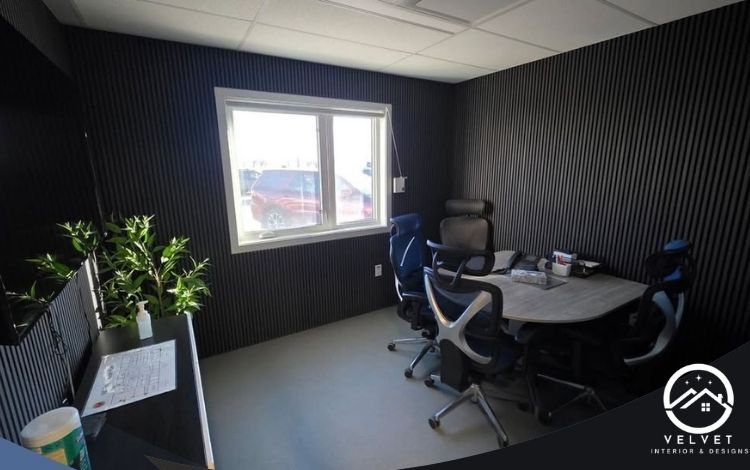
The Acoustic slat wall panels consist of wood slats mounted on an acoustic felt backing. It allows the sound to pass through gaps to the sound-absorbing backing layer. It is often made from recycled PET acoustic material, an environmentally friendly option that complements modern architectural styles.
You can use it in living rooms, offices, hotels, and commercial interiors to reduce echo while maintaining a decorative wall design, either installed vertically or horizontally, depending on the design.
Velvet Interior and Design offers high-quality wall panels designed to enhance interior aesthetics while improving acoustic performance.
FAQs about the Types of Acoustic Panels
What are the different types of acoustic panels?
- Fabric wrapped acoustic panels
- Wood Slat Acoustic Panels
- Foam Acoustic Panels
- Perforated Wood Panels
- Acoustic Wall Tiles
What are the three types of acoustics?
Room Acoustics, such as offices, homes, studios, and theaters.
Architectural Acoustics this type focuses on designing buildings and interiors to control sound quality, noise levels, and speech clarity.
The environmental Acoustics deals with noise pollution and sound management.
Which acoustic panels are best?
The best acoustic panels depend on your needs, as you can use the fiberglass acoustic panels for their effective sound absorption and the mineral Wool Panels for their excellent noise reduction and fire resistance. Or you can find fabric-wrapped panels that offer strong acoustic performance and allow customization of colors and designs.
Is rockwool or fiberglass better for sound?
The rockwool provides slightly better sound absorption at lower frequencies than fiberglass. On the other hand, the fiberglass acoustic panel is highly effective at absorbing mid- and high-frequency sound waves.