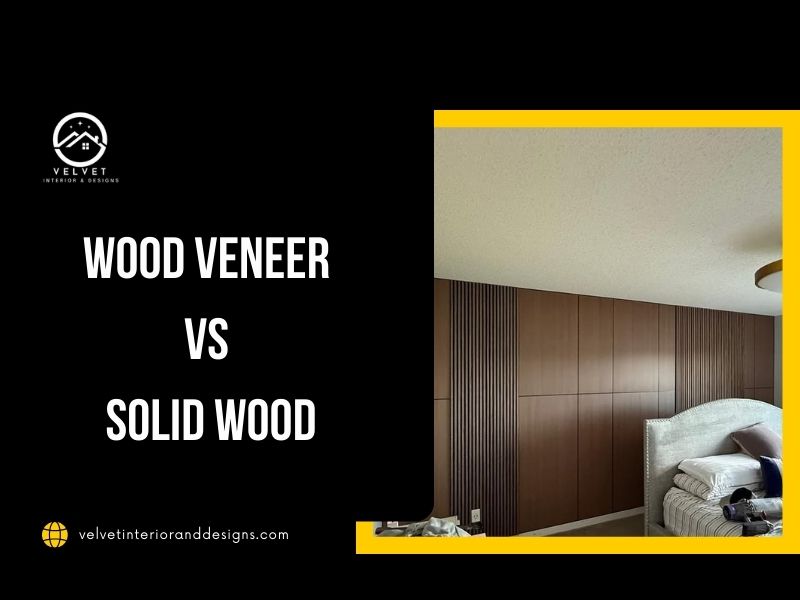
Choosing Wood Veneer vs Solid Wood demands a clear understanding of their differences in material, cost, durability, appearance, and long-term performance. The wood veneer is less prone to expansion and contraction, but the solid wood is crafted entirely from natural wood, so it is prone to expansion and contraction and requires high maintenance.
Wood veneer furniture is typically more affordable than solid wood; however, solid wood is more durable, stable, and easier to repair. This comparison leads us to explore more about Wood veneer vs Solid wood furniture in this article.
Wood Veneer vs Solid Wood
Wood Veneer and Solid Wood are both made from wood; the wood veneer is a thin layer of real wood bonded to a substrate, but the solid wood is made entirely from one piece of wood. Let’s discover the whole meaning of them from the following:
1- What is Solid Wood?
Solid Wood is real wood that comes from one piece of a tree. It is strong, looks natural, and has a beautiful grain. As well, it lasts for many years. Besides, every piece is different, with its own grain, knots, and color, which makes your space unique.
There is Hardwood Solid Wood like Oak, Maple, and Walnut, and Softwood Solid Wood like Pine, which is lighter and less dense.
2- What is Wood Veneer?
Wood Veneer is a thin slice of wood less than 1/40 thick; it is used for adding a wood appearance to doors, cabinets, parquet floors, and different furniture components. This material features more stability and cost-effectiveness and provides a decorative and stylish appearance.
3- Wood veneer vs Solid wood pros and cons
Let’s discover the Advantages and Disadvantages of Wood Veneer vs Solid Wood:
Advantages and Disadvantages of Veneer Wood
Advantages:
- Veneer Wood is more affordable than solid wood.
- This material uses less natural wood, which makes it eco-friendly.
- It is resistant to warping and cracking.
- It provides a real wood look with smooth, consistent patterns.
- The wood veneer is lightweight and easy to install.
- You will find it in many colors and finishes.
Disadvantages:
- It can be damaged easily by moisture if not well sealed.
- You must know that it cannot be sanded many times.
- This material is less durable than solid wood.
- The repair can be difficult if the surface peels or chips.
Advantages and Disadvantages of Solid Wood
Advantages:
- Solid Wood is a very strong and long-lasting material.
- It can be sanded, repaired, and refinished many times.
- Its natural grain gives a rich, authentic appearance.
- The Solid Wood adds higher value to interiors and furniture.
Disadvantages:
- It is more expensive than wood veneer.
- Heavy and harder to install; requires professionals.
- Can expand, shrink, or crack with humidity changes.
4- Wood veneer vs Solid wood price
Wood veneer vs Solid wood cost is important to consider before taking any decision; you will find the Wood Veneer Lower cost than Solid Wood, but it is Less durable and requires low maintenance.
Factors to Consider When Choosing Between Solid Wood and Veneer Furniture
1- Budget: Wood Veneer vs Solid Wood
Considering the budget is a main factor in deciding between choices, as you will find that:
Solid wood is an expensive choice because it is made from natural solid wood, which provides greater durability and a longer lifespan compared to other alternatives.
Wood Veneer is a budget-friendly choice and considered affordable for DIY projects; at the same time, it offers a wood look and some key features in durability.
2- Durability and Longevity
Durability and lifespan are two of the factors that homeowners and interior designers are searching for. Let’s discover the solid wood and wood veneer durability and longevity:
Solid wood features a strong and durable wood that can last for many years if cared for properly.
Wood Veneer is durable for everyday use, but it may not last as long as solid wood.
Tips to Care for Solid Wood
- Use a soft, dry, or slightly damp cloth.
- Avoid harsh chemicals or strong cleaners.
- Do not leave wet items on the surface.
- Keep furniture away from direct sunlight.
- Do not drag heavy objects across the surface.
3- Appearance
The solid wood provides natural, unique patterns; on the other hand, the wood veneer provides a clean wood appearance at an effective cost.
4- Repairability
You must know that Solid wood can be sanded and refinished many times, but the wood Veneer has a thin surface layer of wood, which means the repair options are limited.
5- Environmental Impact & Sustainability
The solid wood uses natural resources, as it is made from a natural wood that offers a unique appearance. On the other hand, the wood veneer uses less wood, but it is also considered an eco-friendly option in the market.
6- Maintenance
The solid wood needs polishing and protection from moisture and heat. But the wood veneer just needs a simple cleaning.
How to tell if a table is solid wood or veneer?
You can tell if a table is solid wood or veneer from the Edges, as you will find the solid wood has a grain that continues smoothly around the edges, but the wood veneer has a thin layer on top.
Veneer vs solid Wood how to tell? It sounds like this: the solid wood makes a deep, solid sound, and the wood veneer sounds hollow or lighter. Then look at Joints and Corners; If the Joined pieces are visible, it will be solid wood, but if it is Large flat panels with fewer joints, it will be wood veneer.
FAQS about Wood Veneer vs Solid Wood
What are the disadvantages of veneer wood?
- The deep scratches and heat can damage the veneer wood.
- It cannot be sanded many times like solid wood.
- It requires replacement when it peels or chips.
Is veneer cheaper than real wood?
Yes, veneer is cheaper than solid wood because it uses a thin layer of real wood over different core materials; it can be MDF, plywood, or other materials. This lowers the material and production costs while giving a natural wood look.
Is veneer stronger than wood?
Not usually to find that veneer stronger than wood. You can find that solid wood is stronger for heavy use and long-term durability. However, you can also find that veneer panels with engineered cores can be more stable and less likely to warp in humid conditions.
Is veneer made of real wood?
Yes. Veneer is made from real wood that is sliced into thin sheets and applied to different core materials; it can be MDF, plywood, or other materials.